Engine repair
Noises, leaks, overheating and misfires diagnosed at the source — gas or diesel — and repaired with the reason explained before the work starts.
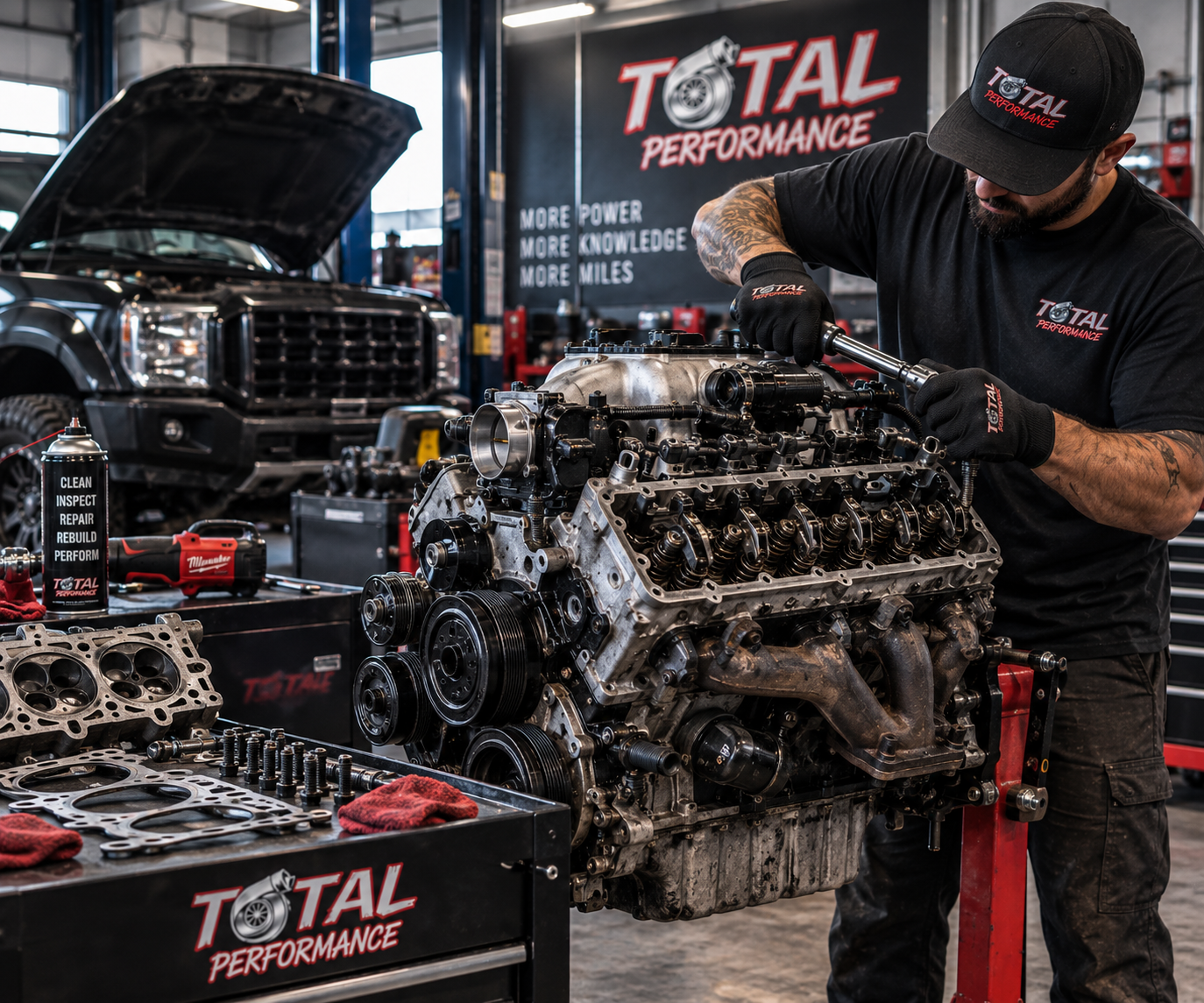
How engine repair should go
Most engine repairs go wrong at the diagnosis, not the repair. A misfire gets a coil, then a plug, then an injector, and the actual fault — a leaking gasket, a timing issue, low compression — is still sitting there.
We test first. Compression and leak-down where it matters, live data, cooling system pressure testing, and an actual look at where the leak is coming from rather than where it landed.
Then you get told what failed and why, with a written number, before anything is taken apart further.
What we actually do
- Misfires, rough running and drivability faults traced to their source.
- Oil and coolant leaks found properly, not guessed from the puddle.
- Overheating diagnosed across the whole cooling system.
- Timing components, gaskets, sensors and cooling parts replaced as needed.
- Compression and leak-down testing when the fault is mechanical.
Signs to get it looked at
- Knocking, ticking or a new noise under the hood
- Running temperature climbing higher than normal
- Oil or coolant disappearing between services
- White, blue or black smoke from the exhaust
- A rough idle or a persistent misfire
- Loss of power that came on gradually
Talk it through with the shop
Tell us the vehicle and what it is doing. We diagnose first and quote before any work starts — no surprises on the invoice.