Brakes
Pads, rotors, calipers, fluid and lines — inspected, measured and replaced only where measurement says they need it.
How we approach brake work
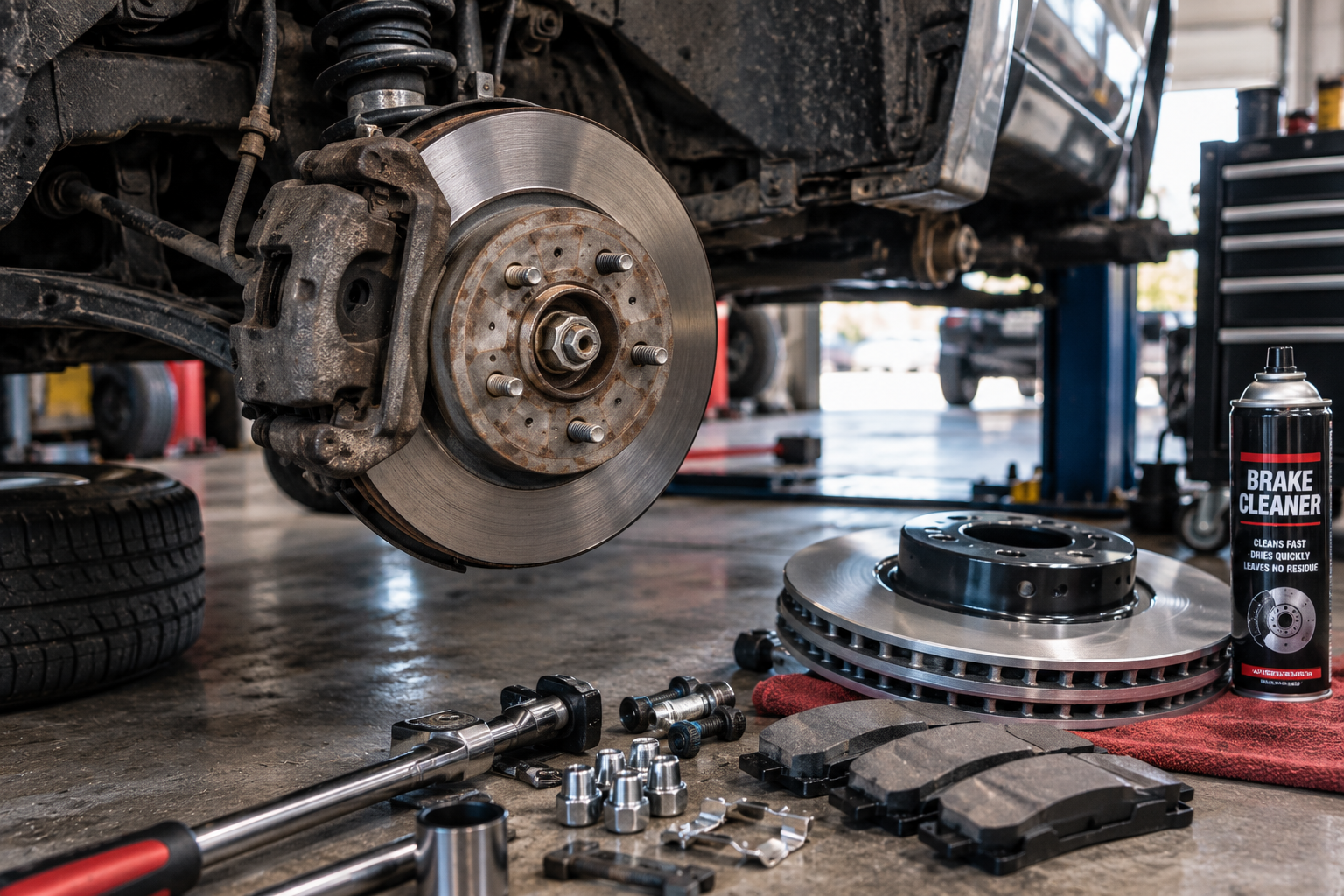
Brakes are the one system where nobody should be guessing. Pad thickness and rotor thickness are measurable numbers with published minimums, so a brake inspection should end with numbers, not opinions.
We measure, show you what we found, and replace what is out of spec. If the rotors still have life in them, we will say so.
Fluid matters as much as pads. Brake fluid absorbs moisture over time, which lowers its boiling point — that is what a soft pedal after heavy braking usually is.
What we actually do
- Pad and rotor thickness measured against the manufacturer minimum.
- Calipers, hardware, hoses and lines inspected for drag and leaks.
- Brake fluid condition checked and flushed where needed.
- Pads and rotors matched to how you drive — daily, towing or performance.
- Proper bedding-in so the new brakes work as intended from day one.
Do not wait if you notice
- Squealing, grinding or scraping when stopping
- A pedal that feels soft, spongy or long
- Vibration or pulsing through the pedal
- The vehicle pulling to one side when braking
- A brake warning light
- Longer stopping distances than you remember
Talk it through with the shop
Tell us the vehicle and what it is doing. We diagnose first and quote before any work starts — no surprises on the invoice.